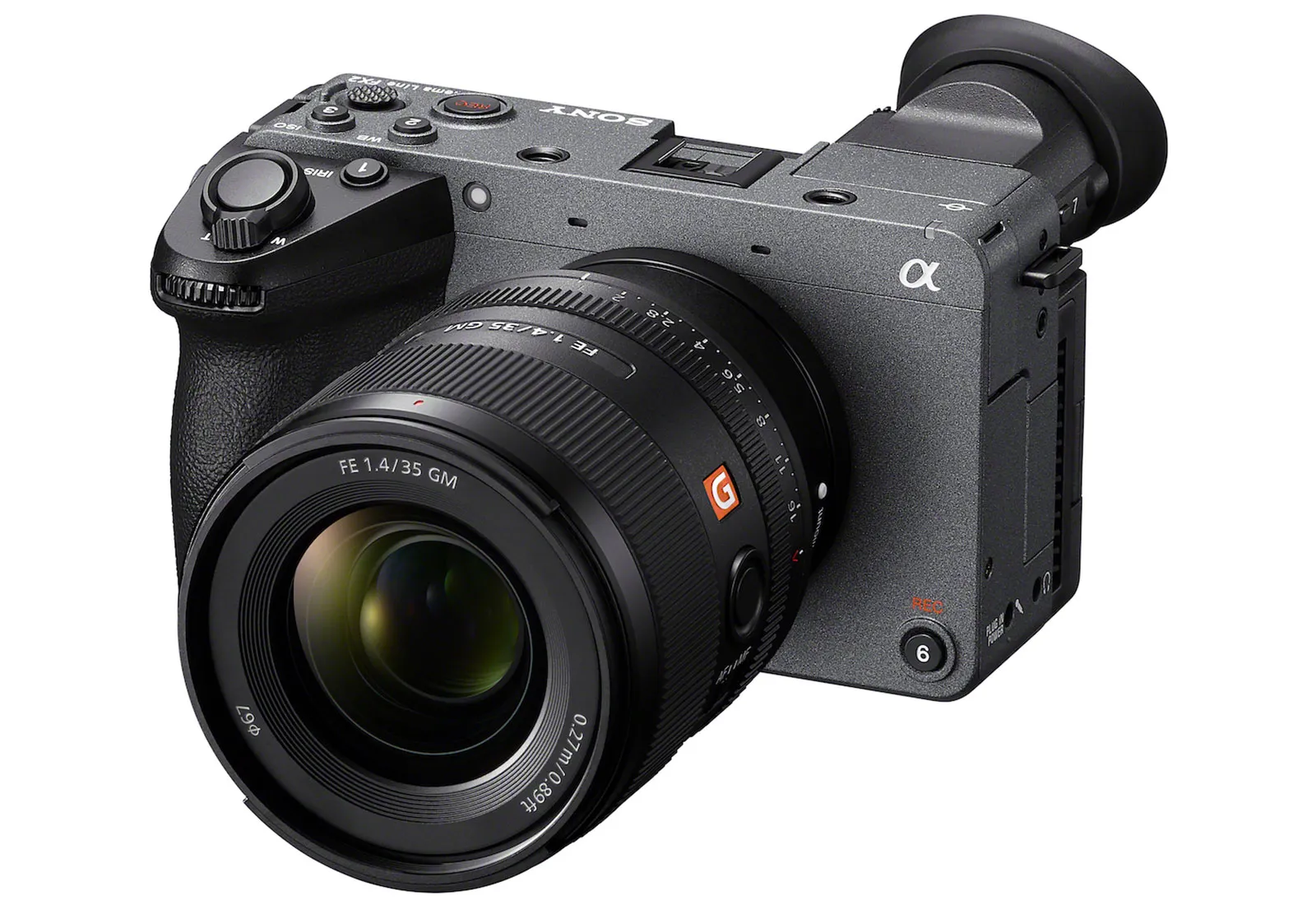
Alright, so the Sony FX2 cinema camera is out, and everyone’s talking about it. It’s supposed to be this cool mix of Sony’s best stuff, like a video camera that can also take awesome pictures. But is it really all that? In this Sony FX2 cinema camera review, we’re gonna break down what makes this camera tick, see how it stacks up against others, and figure out if it’s the right choice for you.
Key Takeaways
- The Sony FX2 uses a 33-megapixel full-frame sensor, similar to the a7 IV, which is great for sharp 4K video.
- It has a built-in electronic viewfinder (EVF) that tilts, a feature missing from the FX3.
- The camera includes a built-in fan for long recording times, helping prevent overheating.
- Autofocus is super reliable thanks to Sony’s AI-based Real-time Recognition AF.
- It’s designed for both video and still photography, making it a good choice for hybrid shooters.
Sony FX2 Review: What’s On The Inside?
Sensor Technology and Performance
The Sony FX2 uses a 33-megapixel full-frame BSI sensor, which is the same one found in the a7 IV. This sensor is pretty good at capturing detail, especially for 4K video up to 30 frames per second, because it oversamples the footage. It’s also a dual-gain sensor, meaning it has two base ISOs (800 and 4000) when you’re shooting in S-Log3, which helps with dynamic range and keeping noise down in low light. However, this sensor isn’t the fastest out there. You might notice some rolling shutter or “jello effect” when you’re moving the camera around quickly, especially in those oversampled 4K modes. Also, if you want to shoot 4K at 60 frames per second, the camera has to crop into an APS-C size, which is a bit of a bummer compared to other FX models that can do full-width 4K60.
Video Capabilities and Limitations
The FX2 is built for video, no doubt about it. It can record 4:2:2 10-bit All-I footage, which is great for color grading and post-production. It also has a dedicated record button, a switch to go between movie and still modes, and a menu system that’s optimized for video work. You even get shutter angle control, which is a must-have for serious videographers. But, as mentioned, that 4K60 crop is a limitation. It means you lose some of your wide-angle view when you want that higher frame rate. Also, while it has anamorphic de-squeeze display, it only supports 1.33x and 2x squeeze ratios, which might not cover all anamorphic lenses out there.
The internal fan is a big plus for video shooters. It means you can record for a long time without worrying about the camera overheating, which is a common issue with many mirrorless cameras when shooting high-resolution video. This feature alone makes it a more reliable tool for extended shoots compared to some of its smaller, non-cinema line siblings.
Image Quality and Dynamic Range
With its 33-megapixel sensor, the FX2 delivers sharp images, both for video and stills. Sony claims it has up to 15 stops of latitude, which means it can capture a lot of detail in both the bright highlights and dark shadows of a scene. This is especially true when using S-Log3 with the dual base ISOs. The image quality is generally clean, even at higher ISOs, thanks to that dual-gain design. For photographers, the inclusion of a mechanical shutter is a welcome addition, as it helps to reduce the rolling shutter effect that can be more noticeable in still photos taken with electronic shutters. This makes it a pretty versatile camera for hybrid shooters who need good quality for both video and stills.
| Feature | Detail |
|---|---|
| Sensor Resolution | 33 Megapixels |
| Video Resolution | 4K up to 60p (with crop at 60p) |
| Color Depth | 10-bit 4:2:2 |
| Dynamic Range | Up to 15 stops (Sony claim) |
| Base ISO (S-Log3) | 800, 4000 |
- The oversampled 4K at 30p provides excellent detail.
- Dual base ISO helps manage noise and dynamic range.
- The mechanical shutter is good for still photography and reducing rolling shutter artifacts.
Design and Ergonomics of the Sony FX2
Physical Design and Build
The Sony FX2 takes a lot of its physical cues from the FX3 and FX30, but it brings some notable changes that make it stand out. One of the biggest additions is the built-in electronic viewfinder (EVF), which the FX3 completely lacks. This EVF has a 3.68-million dot display and can tilt up to 90 degrees, giving filmmakers more flexibility when framing shots from different angles. It’s a fixed component, though, so you can’t remove it or swap it out. The camera also features a fully articulating rear display, although its resolution is a bit lower at 1.03 million dots. Despite its somewhat chunky appearance, the FX2 is surprisingly light, weighing in at just 24 ounces (679 grams). This makes it a good choice for handheld shooting or when using a gimbal.
The design of the FX2 feels like a thoughtful evolution, blending the best aspects of Sony’s cinema and Alpha lines. It’s clear that Sony is trying to bridge the gap between dedicated cinema cameras and more versatile hybrid shooters, offering a body that feels robust yet remains manageable for various production scenarios.
User Interface and Controls
The FX2’s user interface is optimized for video production, drawing inspiration from Sony’s Venice cameras. It includes a “BIG6” home screen design, which puts six of the most frequently adjusted settings right at your fingertips for quick access. There’s a large, dedicated record button, a switch to easily toggle between movie and still modes, and a full-size HDMI port. One design choice that might take some getting used to is the top-mounted autofocus joystick. While it made sense on other FX bodies designed to be held lower, using the EVF can make it a bit awkward to find consistently. The camera also supports shutter angle control, which is a must-have for serious videographers.
Mounting Points and Accessories
One of the practical aspects of the FX2’s design is the abundance of 1/4-inch mounting points scattered across its chassis. These are incredibly useful for attaching various accessories like external monitors, microphones, or handles without needing a full cage. The camera also supports a top XLR handle, which is great for professional audio integration. However, some smaller details, like the plastic cover over the HDMI port, can be a bit fiddly to deal with. Overall, the camera is built to be highly customizable and adaptable to different shooting setups.
- Numerous 1/4-inch mounting points for accessories.
- Support for a top XLR handle.
- Full-size HDMI port.
- Dedicated record button and mode switch.
- Customizable controls for personalized workflows.
Sony FX2 Versus Other Cinema Cameras
Distinguishing Features from the FX3
When you look at the FX2 and the FX3, they seem pretty similar at first glance. But there are some big differences. The FX2 has a higher-resolution image sensor, which is a pretty big deal. Also, the FX2 comes with an electronic viewfinder (EVF), which the FX3 just doesn’t have. This EVF can even tilt, making it easier to get those tricky shots. The FX2 also has a fully articulating rear screen, though its resolution isn’t super high. It also supports anamorphic de-squeeze display, but only for specific ratios. The FX2 is positioned as a more affordable option compared to the FX3, despite packing some impressive features.
Advantages Over the a7 IV
So, the FX2 shares a lot of its internal parts with the a7 IV. They both have that 33-megapixel sensor, for example. But the FX2 is built more like a cinema camera. It has a dedicated record button, a switch for movies and stills, and lots of mounting points. It also has a full-size HDMI port, which is great for filmmakers. Plus, it has shutter angle control, which is a must-have for serious video work. The FX2 also has a built-in fan to keep it cool during long shoots, and it supports a top XLR handle for better audio. If you’re looking for a camera that can do both photos and videos really well, the FX2 might be a better fit than the a7 IV, especially with its improved autofocus.
Comparison with Other FX Models
The FX2 is a bit of a departure for Sony’s FX line. While other recent FX models offer full-width 4Kp60, the FX2 requires an APS-C crop for 4Kp60. This is a pretty big difference and something to consider if you shoot a lot of 4K at higher frame rates. However, the FX2’s 33-megapixel sensor does produce very sharp oversampled 4K video up to 30p. It’s also a dual-gain sensor, which means it has good dynamic range at its base ISO and low noise at higher ISOs. One thing to note is that the sensor can be a bit slow, leading to some rolling shutter in certain modes. While many cinema cameras, including some Sony FX models, don’t offer internal ProRes recording, the FX2’s overall package still makes it a strong contender for many filmmakers. ProRes recording is often a feature sought after by professionals.
The FX2 really shines as a hybrid camera, blending the best of Sony’s mirrorless and cinema lines. It offers a user experience that feels both familiar and new, making it a compelling choice for creators who need versatility without breaking the bank. It’s not perfect, especially with its 4Kp60 crop, but it gets a lot right for its price point.
Advanced Features for Filmmakers

Professional Audio Integration
When you’re shooting serious video, good audio is just as important as good visuals. The Sony FX2 really steps up here, offering some solid options for professional sound recording. It’s not just about plugging in a mic; it’s about having the control you need to get clean, usable audio right in the camera. This camera makes it easier to capture high-quality sound without needing a separate audio recorder for every shoot.
- It has a multi-interface shoe that supports digital audio, which is a big deal. This means you can attach compatible microphones directly and get a clean digital signal, avoiding the noise that can sometimes creep in with analog connections.
- There are also standard 3.5mm mic and headphone jacks, so you can use a wide range of existing audio gear. This flexibility is super helpful for different setups.
- The camera provides comprehensive audio level controls, including independent channel adjustments. This lets you fine-tune your sound on the fly, which is pretty much a necessity for any serious filmmaker.
The ability to integrate professional audio directly into the camera workflow saves a lot of time and hassle in post-production. It means less syncing and more focus on the creative aspects of filmmaking.
Color Science and Picture Profiles
Sony’s color science has been a topic of discussion for years, and with the FX2, they’ve continued to refine it. The camera comes with a variety of picture profiles, giving filmmakers a lot of creative control over the final look of their footage. This isn’t just about making things look pretty; it’s about having a consistent and flexible base for color grading.
- S-Cinetone is a standout feature here. It’s designed to produce pleasing skin tones and a cinematic look right out of the camera, reducing the need for extensive grading for many projects. It’s a great option for quick turnarounds or when you want a polished look with minimal effort.
- The camera also supports S-Log3 and S-Gamut3.Cine, which are essential for those who want to push their footage in post-production. These profiles capture a huge amount of dynamic range and color information, giving colorists maximum flexibility.
- You can also create and save custom user LUTs (Look Up Tables) directly in the camera. This is incredibly useful for monitoring on set with your desired look applied, or for applying a specific creative style consistently across shots.
Anamorphic Lens Support
For filmmakers looking to achieve that classic cinematic widescreen look, anamorphic lenses are the way to go. The Sony FX2 offers features that make working with these specialized lenses much easier, which is a big plus for creative expression. The camera’s 33 Megapixel sensor is well-suited for this kind of work.
- The camera includes a de-squeeze display function. Anamorphic lenses optically squeeze the image horizontally, and this function digitally stretches it back out on the monitor, so you can see what your final image will look like while you’re shooting. This is a huge time-saver and helps with framing.
- It also supports various de-squeeze ratios, accommodating different anamorphic lenses. This flexibility means you’re not limited to just one type of anamorphic glass.
- The ability to use anamorphic lenses opens up a whole new world of creative possibilities, from unique bokeh to wider aspect ratios, giving your projects a distinct cinematic feel.
Autofocus and Hybrid Shooting Capabilities
AI-Based Real-time Recognition AF
The Sony FX2 really shines when it comes to its autofocus system. It uses a dedicated processor for AI-based autofocus, which makes it incredibly reliable. This means that whether you’re shooting fast-moving subjects or trying to keep a person in focus during an interview, the camera does a great job. The system is designed to recognize and track subjects in real-time, making it a solid choice for dynamic shooting situations. I’ve seen examples where even in tricky lighting or with subjects moving erratically, the AF holds on tight. This kind of precision is a big deal for filmmakers who can’t afford to miss a shot.
Still Photography Performance
While the FX2 is primarily a cinema camera, its still photography capabilities are surprisingly good. Thanks to that same advanced autofocus system, taking photos of things like skiers, animals, or even just active kids results in consistently sharp images. It’s not just an afterthought; the camera genuinely performs well for stills. This makes it a true hybrid option, something that’s becoming more and more important for creators who need versatility. If you’re looking for a camera that can handle both high-quality video and excellent photos, the FX2 is a strong contender. For those considering the Sony a7 IV, the FX2 offers a compelling alternative with its 33-megapixel sensor and superior autofocus.
Seamless Photo and Video Workflow
One of the best things about the FX2 is how easily you can switch between shooting photos and videos. There’s a dedicated switch for it, which is a small but significant detail that makes the workflow much smoother. This isn’t just a video camera that can take photos; it’s built to do both without compromise. This hybrid design means:
- You don’t need to carry two separate cameras for different tasks.
- The controls and menu system are intuitive for both photo and video modes.
- The autofocus performance translates directly from video to stills, ensuring consistency.
- It saves time on set by allowing quick transitions between shooting styles.
The ability to trust the autofocus completely, whether you’re capturing a fleeting moment in a still or a long take in video, makes the shooting experience simple, fast, and genuinely enjoyable. This kind of reliability frees you up to focus on the creative aspects of your work rather than worrying about technical issues.
Practical Considerations for the Sony FX2

Continuous Recording and Heat Management
Alright, so let’s talk about something super important for anyone shooting video: how long can this thing actually record without melting down? Nobody wants their camera to overheat in the middle of a crucial shot. The FX2, thankfully, has a built-in fan, which is a pretty big deal. This isn’t just some tiny little vent; it’s designed to keep things cool even during really long takes. I mean, we’re talking hours here. You can pretty much record continuously for up to 13 hours if you’re plugged into power and have enough storage. That’s a massive benefit, especially compared to some other cameras that start blinking red after 20 minutes. It means you can set it up and forget about it, focusing on the creative stuff instead of constantly checking the temperature gauge. This active cooling system really sets it apart from many mirrorless cameras that struggle with extended recording.
Portability and Handheld Use
When you first look at the FX2, it might seem a bit chunky, right? Like, it’s got that cinema camera vibe. But here’s the kicker: it’s actually pretty light. We’re talking around 24 ounces, or 679 grams. That’s not much at all for a camera with this kind of capability.
What does that mean for you? Well, it means it’s really good for handheld shooting. You won’t feel like you’re lugging a brick around all day. And if you’re into gimbal work, it’s a dream. It balances well, and its relatively low weight means less strain on your arms and the gimbal itself.
Plus, with all those 1/4-inch mounting points scattered around the body, you can attach accessories directly without needing a full cage, which also helps keep the weight down and makes it more streamlined for run-and-gun situations. For content creators looking for the best cameras for vlogging, this portability is a huge plus.
Pricing and Availability
So, how much is this thing going to set you back? And when can you actually get your hands on one? The Sony FX2 is priced at $2,699 for just the camera body. If you want to get the Sony XLR handle with it, which is a pretty sweet addition for professional audio, the price jumps up to $3,098. It’s not exactly pocket change, but for what you’re getting—a camera that blends high-end video features with solid still photography capabilities—it’s pretty competitive. As for when you can buy it, pre-orders are usually available, and shipping typically starts a month or two after the announcement. So, if you’re thinking about it, you’ll want to keep an eye on your favorite camera retailers for availability updates.
The FX2 really hits a sweet spot for filmmakers who need reliable, long-form recording without the bulk of traditional cinema cameras. Its design choices prioritize practical use in real-world shooting scenarios, making it a strong contender for serious video production.
The Sony FX2 Gets a Lot Right
Enhanced User Experience
Shooting with the FX2 was a really good experience, probably my favorite out of all the cameras in the FX line. Some folks might say that adding things like the EVF, a deeper grip, and a mechanical shutter just makes it feel more like a regular Alpha camera, and less like a dedicated cinema camera. But honestly, I do all my professional work with mirrorless cameras precisely because I find those photo-centric features super helpful even when I’m shooting video. The ability to truly trust the autofocus made the whole shooting process simple, fast, and genuinely enjoyable. It just felt right.
Benefits of Hybrid Design
This camera really shines because it blends the best parts of a cinema camera with the practical features of a mirrorless photo camera. You get that robust video performance, but then you also have things like a mechanical shutter, which helps a lot with rolling shutter issues that can pop up with the 33-megapixel sensor. Plus, the built-in fan is a huge win for long recording sessions; I couldn’t get this thing to overheat, even when pushing it with oversampled 4K. It’s a true hybrid, ready for both stills and motion.
Areas for Future Improvement
While the FX2 gets a lot right, there are a couple of things that hold it back from being absolutely perfect. The readout speed isn’t the fastest, and that leads to some pretty noticeable rolling shutter artifacts, especially in certain shooting conditions. Also, the fact that 4Kp60 requires an APS-C crop is a bit of a bummer, especially when other recent FX models can do full-width 4Kp60. If Sony could address these points in a future model, perhaps an FX3 II with this body design and autofocus, it would be an incredible video tool. It’s almost there, just a few tweaks away from perfection.
Conclusion
So, the Sony FX2. It’s kind of a mixed bag, right? On one hand, you get that nice 33-megapixel sensor and a built-in viewfinder, which is pretty cool for a camera in this line. It feels solid, and it can record for a long time without getting hot, which is a big plus for serious video work. But then, you hit a snag with the 4K 60p being cropped, and the rolling shutter can be a real pain. It’s like they almost got it perfect, but not quite. Still, for the price, it’s a good option if you want a dedicated video camera that also handles photos well. It’s not for everyone, but it definitely has its place.
Frequently Asked Questions
What makes the Sony FX2 special?
The Sony FX2 is a unique camera because it mixes the best parts of Sony’s cinema cameras with their regular mirrorless cameras. It’s great for people who want to shoot both high-quality videos and sharp photos.
Can the Sony FX2 record for a long time without getting hot?
Yes, the FX2 is built to handle long recording times. It has a special fan inside that helps keep it cool, even when shooting for hours.
How good is the image quality on the Sony FX2?
The FX2 has a 33-megapixel sensor, which is really good for taking detailed pictures. It also records very clear 4K video.
How well does the autofocus work on the Sony FX2?
The FX2 has a special autofocus system that uses smart technology to find and follow people, animals, and even insects. This makes it easy to keep your subjects in focus.
Is the Sony FX2 easy to use and carry around?
The FX2 has a design that’s easy to hold and use, even for long periods. It’s also pretty light, so it’s good for shooting by hand or with a gimbal.
Who is the Sony FX2 best for?
The FX2 is a good choice for filmmakers who need a camera that can do a lot, including professional sound and special color settings. It’s also great for people who want to take high-quality photos alongside their videos.