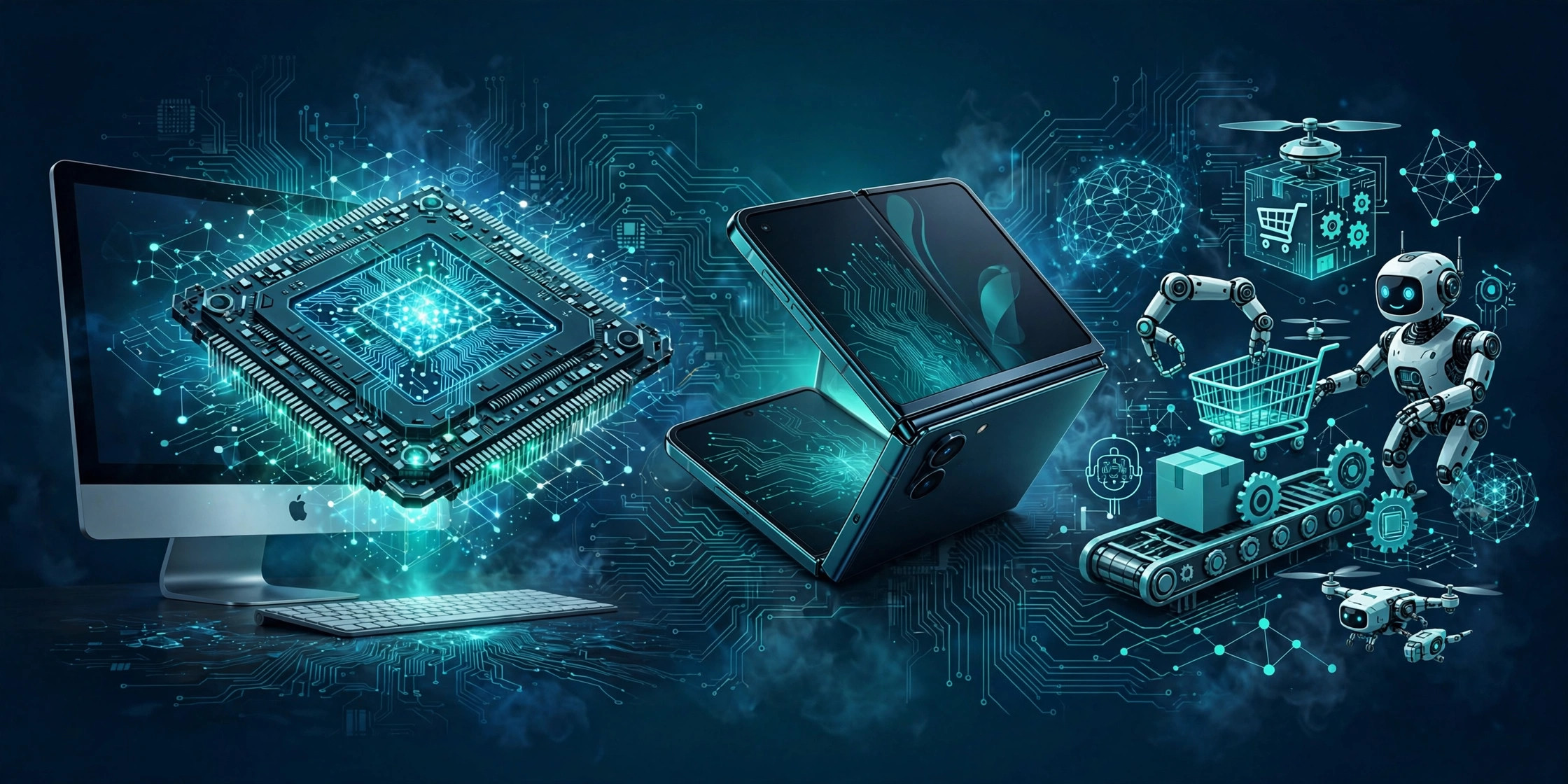
Another packed 24 hours in tech news on October 16, 2026, and the theme is unmistakable: AI is leaving the cloud and showing up everywhere else — on desktops, in shopping carts, and inside government meeting rooms. Meta dropped an open-weight giant tuned for Macs, China moved to clamp down on AI and chip exports, Washington’s new AI task force held its first meeting, Google let its agents start doing your shopping, and Apple’s foldable iPhone opened pre-orders in India. Here’s the breakdown.
Key Takeaways
- Meta’s Muse Spark Open is an 816-billion-parameter open-weight model optimized to run on Apple Mac Studio machines.
- China proposed restricting or banning exports of 40 tech areas, including AI and chips, citing national security.
- A new US AI task force held its inaugural meeting, setting up a 120-day risk study and early-warning protocols for labs.
- Google’s Universal Cart launched in the US, with AI agents that can call stores to check product availability.
- The iPhone Duo, Apple’s first foldable, opened pre-orders in India starting at ₹299,900, ahead of an October 23 launch.
1. Meta Goes Open on the Desktop: Muse Spark Open for Macs
The biggest AI story of the day came from an unlikely partnership. Meta launched Muse Spark Open, which it calls the most capable open-weight model built in the US — and it was designed to run on Apple’s Mac Studio, in collaboration with Apple itself.
The numbers are big: 816 billion total parameters (42 billion active), a 1-million-token context window, native multimodality, and a focus on coding and agentic work. In demos, Meta showed the model fixing bugs and adding features to an open-source Mastodon client, and even reviewing and cropping footage in DaVinci Resolve — all running on local hardware.
The catch is the hardware. You need a staggering 1TB of RAM to run it locally, which means two M5 Ultra Mac Studios with 512GB of unified memory each (or four 256GB units) linked over Thunderbolt 5, powered by Apple’s MLX framework. That’s roughly a $38,000 setup, so this is aimed squarely at developers and labs, not your home office. But the direction of travel matters: frontier models are moving from distant data centers onto desks, and Apple and Meta — hardly best friends historically — teamed up to make it happen.
2. China Moves to Restrict AI and Chip Tech Exports
While Meta was opening up, China was closing doors. On Friday, China’s Ministry of Commerce and Ministry of Science and Technology published a draft document proposing to restrict or ban exports of 40 technology areas spanning AI, chips, and solar power, citing national security. A commerce ministry spokesperson called the move “necessary” as the technology race with countries including the US intensifies.
This is the other side of the open-weights story: even as labs race to make models more open, governments are racing to draw borders around the most sensitive capabilities. Combined with the new US AI task force (below), it’s clear the AI era’s geopolitical chapter is moving from rhetoric to real policy machinery.
3. Washington’s New AI Task Force Holds Its First Meeting
Speaking of policy: the US government’s new AI task force, dubbed the Super Intelligence Task Force, held its inaugural meeting on Thursday. Director of National Intelligence Jay Clayton told CNBC the group set up protocols, commissioned a risk study led by David Sacks, and established three committees covering reporting and response, critical infrastructure, and law enforcement.
Notably, the group is formally established for 120 days and is working on “protocols and mechanisms for labs to provide early warnings” of breaches, hacks, and jailbreaks to the government. AI wrongdoing would be enforced through the FTC or the Justice Department. Whether a 120-day sprint produces durable guardrails is an open question, but the frontier labs are officially on notice.
4. Google’s AI Agents Start Doing Your Shopping
Agentic commerce took a concrete step forward this week: Google made Universal Cart broadly available to US users, tying it to the company’s Universal Commerce Protocol. The shopping experience includes a “Let Google Call” feature — an AI agent that literally calls stores on your behalf to check product availability.
This is the latest move in a week where agents keep escaping the chat window — Meta’s model pairs with agentic coding tools, and now Google’s agents handle the phone calls you’d rather skip. Retailers and payments teams will need to start thinking about agent-friendly endpoints, because shoppers are about to arrive with AI assistants in tow. (For more on the agent takeover, see our October 14 roundup.)
5. iPhone Duo Pre-Orders Open — and AI Gadgets Flood the Holidays
Apple’s first foldable is officially a real product you can almost buy. iPhone Duo pre-orders opened in India today at 5:30 PM IST, with sales starting October 23. The price: ₹299,900 for 256GB, climbing to ₹449,900 for 2TB. Specs include a 7.6-inch inner display, a 5.4-inch outer screen, the A20 Pro chip, and a 48MP dual camera system.
And the Duo isn’t the only AI hardware making noise. It’s a full-on holiday gadget wave: Apple just unveiled smart home gear including HomeView with AI-enhanced Siri; Amazon rolled out Alexa Tablets ($229–$500) running the AI-powered Alexa+; and Microsoft’s Surface Laptop Ultra with an Nvidia AI chip begins shipping today at $2,599. Meta, meanwhile, is betting on the Muse Charm, a Tamagotchi-like AI keychain. The 2026 holiday season is shaping up as the first true AI-gadget Christmas.
The Takeaway
The through-line this week is proximity: AI is getting closer — to your desk (Meta’s Mac model), to your wallet (Google’s shopping agents), to the holiday gift list, and to real regulatory teeth in both Beijing and Washington. The cloud isn’t going away, but the frontier is moving out to the edge, the storefront, and the statute book.
Check back tomorrow for the next roundup.
FAQ
What is Meta’s Muse Spark Open?
Muse Spark Open is Meta’s 816-billion-parameter open-weight AI model, announced October 15, 2026. It’s natively multimodal with a 1-million-token context window, built for coding and agentic tasks, and was optimized with Apple to run locally on Mac Studio machines with M5 Ultra chips — though it requires about 1TB of RAM.
What did China announce about tech exports on October 16, 2026?
China’s commerce and science ministries published a draft proposal to restrict or ban exports of 40 technology areas spanning artificial intelligence, chips, and solar power, citing national security as the US-China technology race intensifies.
When does the iPhone Duo launch and how much does it cost?
The iPhone Duo, Apple’s first foldable iPhone, opened pre-orders in India on October 16, 2026 and goes on sale October 23. Pricing starts at ₹299,900 for 256GB, rising to ₹449,900 for 2TB.
What is Google’s Universal Cart?
Universal Cart is Google’s new AI-powered shopping experience, launched for US users this week. Built on the Universal Commerce Protocol, it includes a “Let Google Call” feature where an AI agent contacts stores to check product availability on your behalf.
Leave a Reply